How to Understand Generation IV Reactors: 6 Advanced Nuclear Technologies
Generation IV nuclear reactors represent the next leap in nuclear technology — safer, more efficient, and capable of closing the fuel cycle. This guide covers all 6 Gen-IV designs and their commercialization status.
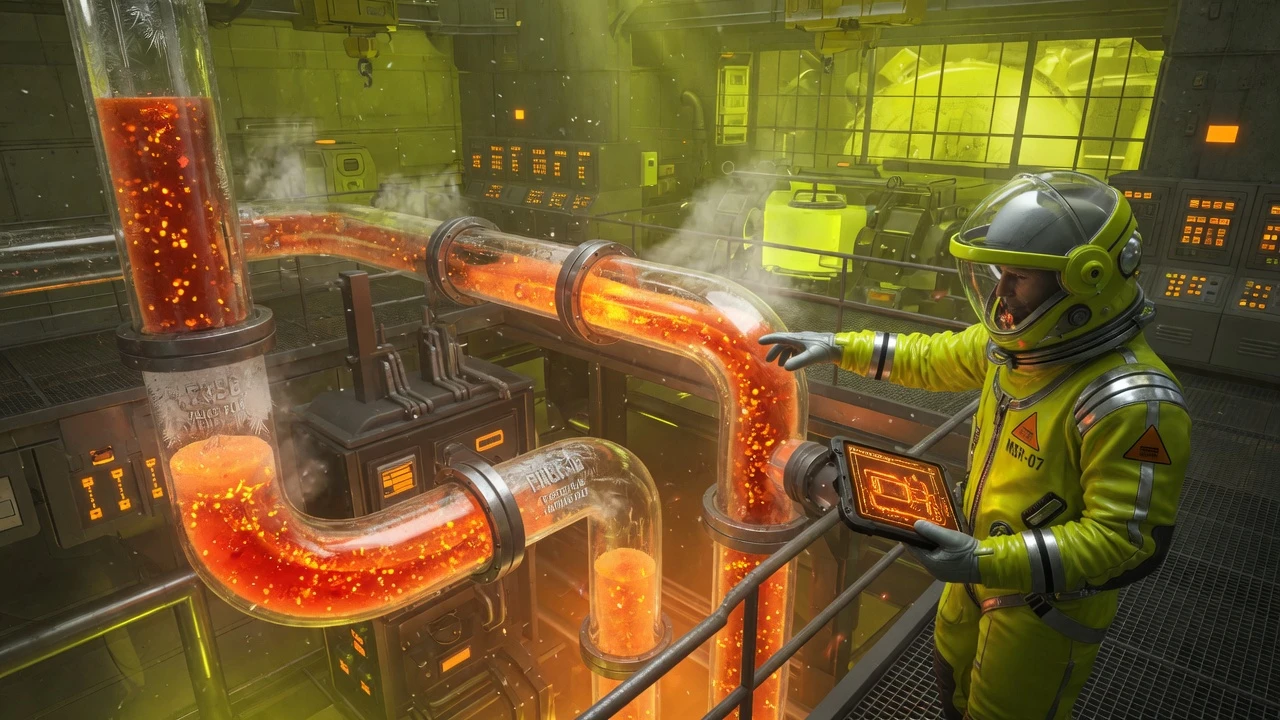
Introduction
Generation IV nuclear reactors represent the next leap in nuclear technology — safer, more efficient, and capable of closing the fuel cycle. This guide covers all 6 Gen-IV designs and their commercialization status.
Prerequisites
- ✓ Basic nuclear physics (fission, chain reactions)
- ✓ Understanding of current reactor designs (LWR, PWR, BWR)
- ✓ General engineering knowledge
Key Concepts
Step-by-Step Guide
- 1
Understand the Gen-IV Vision
The Generation IV International Forum (GIF) selected 6 reactor designs in 2002 for R&D: SFR (Sodium-cooled Fast Reactor), VHTR (Very High Temperature Reactor), SCWR (Supercritical Water-cooled Reactor), GFR (Gas-cooled Fast Reactor), LFR (Lead-cooled Fast Reactor), and MSR (Molten Salt Reactor). Goals: improved safety (passive systems), sustainability (breeding, actinide burning), economics (competitive with natural gas), and proliferation resistance.
textGen-IV Reactor Types: SFR: Sodium-cooled Fast Reactor VHTR: Very High Temperature Reactor SCWR: Supercritical Water-cooled Reactor GFR: Gas-cooled Fast Reactor LFR: Lead-cooled Fast Reactor MSR: Molten Salt Reactor 3 fast spectrum (SFR, GFR, LFR): breeding 2 thermal (VHTR, SCWR): efficiency 1 liquid fuel (MSR): unique safety - 2
Deep Dive: Sodium-cooled Fast Reactor (SFR)
SFR uses liquid sodium as coolant, operates at atmospheric pressure (no pressurized vessel needed), and uses fast neutrons for breeding. Advantages: proven technology (operated in US, Russia, France, Japan), high breeding ratio (can create more fuel than it consumes), and sodium's excellent heat transfer. Disadvantages: sodium reacts violently with water/air (safety concern), opaque coolant (hard to inspect), and positive void coefficient (safety challenge). Commercial status: TerraPower Natrium (345MWe, under construction in Wyoming, 2028 target), Russia's BN-800 (operating).
Tip: SFR is the most mature Gen-IV design — multiple reactors have operated for decades. TerraPower's Natrium is the leading US commercialization effort, combining SFR with molten salt energy storage for load-following. - 3
Deep Dive: Molten Salt Reactor (MSR)
MSR uses molten salt (FLiBe or chloride) as both coolant and fuel carrier. Fuel is dissolved in the salt — no solid fuel elements. Advantages: atmospheric pressure operation, negative temperature coefficient (inherently safe), online refueling and fission product removal, and high thermal efficiency (700°C+ outlet). Disadvantages: material corrosion (Hastelloy-N development needed), tritium production, and regulatory uncertainty (no licensing framework for liquid fuel). Commercial status: Flibe Energy, TerraPower, Moltex, Copenhagen Atomics — all in design/permitting phase.
Warning: MSR regulatory framework does not exist — the NRC has no precedent for licensing a reactor with liquid fuel. This is a major barrier. The NRC is developing a framework but it will take years. - 4
Deep Dive: Lead-cooled Fast Reactor (LFR)
LFR uses molten lead or lead-bismuth eutectic as coolant. Advantages: high boiling point (1,673°C — no pressurization needed), inert coolant (no reaction with water/air), excellent radiation shielding, and fast spectrum for breeding. Disadvantages: lead corrosion of structural materials, heavy coolant (high seismic loads), and polonium-210 production (from bismuth). Commercial status: LeadCold (Sweden), Westinghouse LFR, and Hydromine — all in early design. Russia operated lead-bismuth submarine reactors (Alpha class).
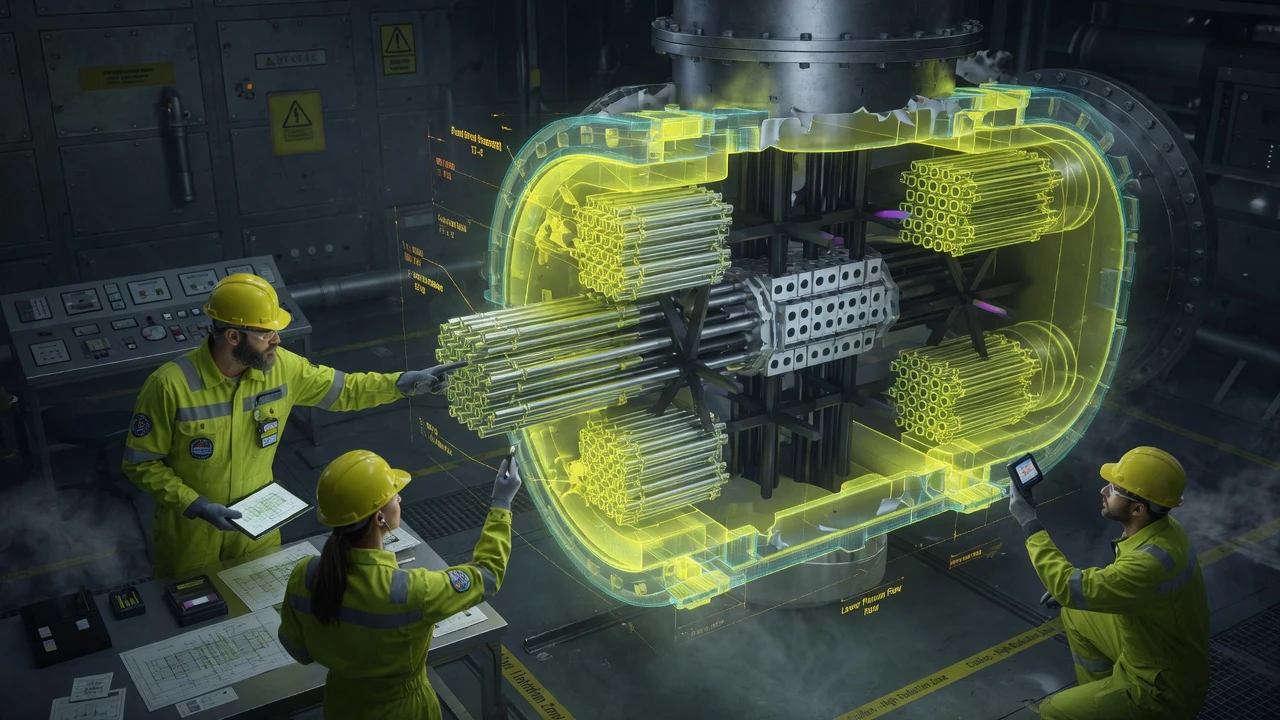
Gen-IV reactor internals must withstand extreme temperatures and corrosive coolants — material science is the key enabler. - 5
Deep Dive: Very High Temperature Reactor (VHTR)
VHTR uses helium coolant and TRISO fuel (tri-structural isotropic fuel particles — inherently safe). Outlet temperature: 900-1,000°C. Advantages: high thermal efficiency (50%+), hydrogen production (thermochemical water splitting), and TRISO fuel retains fission products up to 1,600°C. Disadvantages: high-temperature materials challenge, large reactor vessel, and lower power density. Commercial status: X-energy Xe-100 (80MWe, under development), JAEA HTTR (operating in Japan). TRISO fuel is the key innovation — "cannot melt down" fuel.
Tip: TRISO fuel is the most important near-term innovation in nuclear. Each fuel particle has multiple containment layers (carbon, silicon carbide) that retain fission products even at 1,600°C — well above accident temperatures. This enables inherently safe reactors. - 6
Deep Dive: SCWR and GFR
SCWR (Supercritical Water Reactor): uses water above its critical point (374°C, 22MPa) as coolant — combines LWR simplicity with higher efficiency (45%). Challenge: materials corrosion at supercritical conditions. GFR (Gas-cooled Fast Reactor): uses helium coolant with fast spectrum — combines VHTR efficiency with breeding. Challenge: low thermal inertia (safety concern during loss-of-flow). Both are the least mature Gen-IV designs — unlikely to commercialize before 2040.
- 7
Compare Gen-IV to Current Reactors
Current Gen-III+ reactors (LWRs): 300°C outlet, 33% efficiency, 5-year fuel cycle, open fuel cycle (waste stored), active safety systems, 60-year design life. Gen-IV improvements: 500-1,000°C outlet (50%+ efficiency), closed fuel cycle (waste reduced 100x), passive safety (no operator action needed), breeding (thousands of years of fuel), and process heat applications (hydrogen, desalination, steelmaking).
textGen-III+ vs Gen-IV Comparison: Parameter | Gen-III+ (LWR) | Gen-IV -----------------|----------------|---------- Outlet temp | 300°C | 500-1000°C Efficiency | 33% | 45-50%+ Fuel cycle | Open | Closed Waste lifetime | 100K+ years | ~300 years Safety | Active | Passive Fuel utilization | 1% | 60-100% Breeding | No | Yes (fast) Process heat | No | Yes - 8
Understand Breeding and Actinide Burning
Fast reactors can breed (create more fissile material than they consume) using U-238 or Th-232. This extends nuclear fuel supply from ~100 years to thousands of years. Fast reactors can also burn actinides (Pu, Am, Cm) from LWR spent fuel — reducing waste radiotoxicity lifetime from 100,000+ years to ~300 years. A fast reactor "burner" can consume the transuranic waste from 5-10 LWRs.
Warning: Breeding creates proliferation concerns — it produces plutonium. Gen-IV designs address this with sealed cores, online monitoring, and proliferation-resistant fuel cycles. But policy concerns remain a barrier. - 9
Assess Commercialization Timeline
Near-term (2028-2035): SFR (TerraPower Natrium, Russia BN-1200), VHTR (X-energy, JAEA). Mid-term (2035-2045): MSR (Flibe, TerraPower, Moltex), LFR (LeadCold, Westringhouse). Long-term (2045+): SCWR, GFR. Key barriers: NRC licensing (no framework for non-LWR designs), material development (corrosion, radiation damage), and economics (must compete with renewables + storage). DOE Advanced Reactor Demonstration (ARDP) funds $3.2B for near-term demos.
Tip: The NRC is developing a risk-informed, technology-inclusive licensing framework (10 CFR Part 53) for non-LWR reactors. This is critical for Gen-IV commercialization — the current LWR-centric framework is a major barrier. - 10
Evaluate Gen-IV Economics
Gen-IV economics: higher capital cost than LWRs (novel designs, first-of-a-kind), but lower fuel cost (breeding), lower waste cost (closed cycle), and higher revenue (process heat, hydrogen). SFR: $5,000-8,000/kW (FOAK), targeting $3,000-5,000/kW (NOAK). MSR: $5,000-10,000/kW (FOAK). VHTR: $4,000-7,000/kW. Key economic challenge: competing with renewables + storage ($1,500-2,500/kW) for electricity, but Gen-IV wins on process heat and baseload reliability.
Summary
Generation IV reactors offer improved safety (passive systems), sustainability (breeding, actinide burning), and efficiency (50%+, process heat). The 6 designs: SFR (most mature, TerraPower Natrium), MSR (liquid fuel, regulatory challenge), LFR (inert coolant, corrosion challenge), VHTR (TRISO fuel, hydrogen production), SCWR and GFR (least mature). Key barriers: NRC licensing framework (Part 53 in development), material science, and economics. Near-term commercialization: SFR and VHTR by 2028-2035. Breeding extends fuel supply to thousands of years; actinide burning reduces waste lifetime from 100K+ to ~300 years.
Frequently Asked Questions
TerraPower's Natrium (SFR) in Wyoming, targeting 2028-2030. It combines a sodium-cooled fast reactor with molten salt energy storage for load-following. X-energy's Xe-100 (VHTR) is also near-term, targeting 2030. Russia's BN-800 SFR has been operating since 2015.
Gen-IV designs use passive safety that prevents meltdown without operator action or active systems. MSRs have drain tanks (fuel drains and freezes if overheated). VHTRs use TRISO fuel that retains fission products at 1,600°C. SFRs have natural circulation cooling. However, each design has unique failure modes that must be carefully analyzed.
A closed fuel cycle reprocesses spent fuel to extract usable uranium and plutonium, and fissions transuranics (actinides). This reduces waste volume by 100x, waste radiotoxicity lifetime from 100,000+ years to ~300 years, and fuel utilization from 1% to 60-100%. It also extends fuel supply from ~100 years to thousands of years via breeding.
The NRC's licensing framework (10 CFR Part 50) was written for LWRs. Non-LWR designs (liquid fuel, fast spectrum, different coolants) don't fit the framework. The NRC is developing Part 53 (technology-inclusive, risk-informed) for advanced reactors, but it won't be finalized until 2026-2027. Until then, licensing is case-by-case and expensive.
Test Your Knowledge
1. What is the key advantage of fast neutron reactors?
Fast neutron reactors can breed (create more fissile material than they consume) using U-238 or Th-232, and burn actinides (transuranic waste). This closes the fuel cycle: extending fuel supply to thousands of years and reducing waste lifetime from 100K+ to ~300 years.
2. What makes TRISO fuel inherently safe?
TRISO (tri-structural isotropic) fuel particles have multiple layers of carbon and silicon carbide that act as miniature containment vessels. They retain fission products up to 1,600°C — well above the highest temperature reached in design-basis accidents. This means the fuel "cannot melt down" in a way that releases radioactivity.
3. Which Gen-IV design uses liquid fuel dissolved in molten salt?
The Molten Salt Reactor (MSR) dissolves nuclear fuel directly in the molten salt coolant. This enables online refueling, fission product removal, and a drain tank safety feature (fuel drains and solidifies if overheated). The regulatory challenge is that no licensing framework exists for liquid-fuel reactors.