How to Evaluate Invasive BCI Implants: Neuralink, Synchron, and Clinical Trials
Invasive BCIs promise to restore communication and movement to people with paralysis. Neuralink, Synchron, Blackrock, and Paradromics are leading clinical trials. This guide evaluates each approach, their clinical results, and the path to FDA approval.
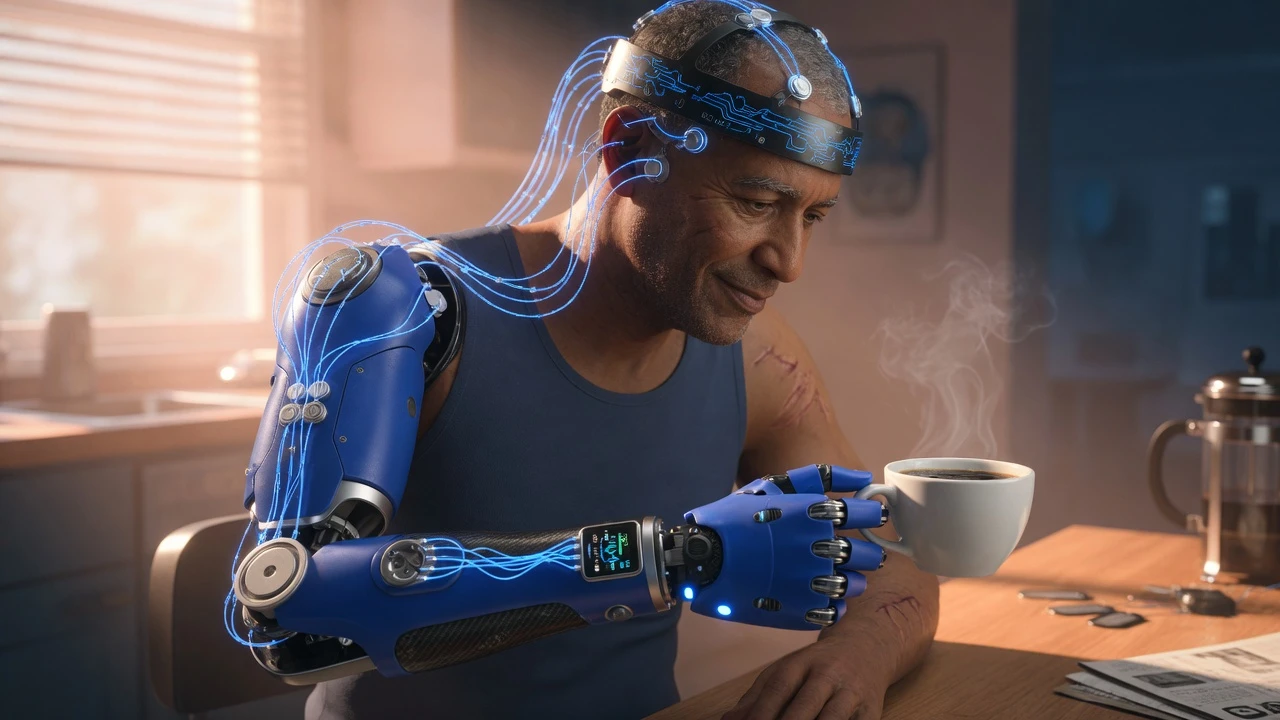
Introduction
Invasive BCIs promise to restore communication and movement to people with paralysis. Neuralink, Synchron, Blackrock, and Paradromics are leading clinical trials. This guide evaluates each approach, their clinical results, and the path to FDA approval.
Prerequisites
- ✓ BCI electrode technologies
- ✓ Neuroscience (motor cortex, neurons)
- ✓ Clinical trial basics (phases, endpoints)
- ✓ FDA medical device regulatory pathway
Key Concepts
Step-by-Step Guide
- 1
Understand the Clinical Need
Invasive BCIs target severe neurological conditions: 1) ALS / locked-in syndrome — complete paralysis, need communication, 2) Spinal cord injury — paralysis below injury level, need motor restoration, 3) Stroke — motor deficits, need rehabilitation, 4) Amputation — need prosthetic control. Population: ~5M ALS patients globally, ~300K SCI in US, ~800K strokes/year. For these patients, the risk-benefit ratio of brain surgery is favorable — restoring communication or movement transforms quality of life.
textTarget Populations for Invasive BCI: Condition | US Patients | BCI Benefit ALS | ~30K | Communication (text, speech) Spinal cord injury | ~300K | Motor control (cursor, robotic arm) Stroke (severe) | ~100K/yr | Motor rehabilitation Amputation | ~2M | Prosthetic control For these patients, brain surgery risk is justified by the transformative benefit of restored function. - 2
Evaluate BrainGate (Blackrock/Utah Array)
BrainGate is the longest-running invasive BCI trial (2004-present). Uses Utah arrays (10x10 silicon micro-needles, 100 channels) in motor cortex. Key results: 1) Cursor control at 2-3 bits/s (equivalent to ~20 wpm typing), 2) Typing at 90 characters/min (with auto-complete), 3. Robotic arm control (reach, grasp, self-feeding), 4) 7+ year implant durability (one participant). Participants: ~15 total. Current: BrainGate2 trial (multi-site). Limitations: wired (percutaneous connector), 100 channels, gliosis over years.
Tip: BrainGate demonstrated that invasive BCIs work in humans. The 90 chars/min typing result (2023, Stanford) used a Utah array + recurrent neural network decoder + auto-complete. This is the gold standard for BCI communication — faster than any non-invasive approach. - 3
Evaluate Neuralink
Neuralink's N1 implant: 1024 electrodes on 64 flexible polymer threads, surgically inserted by R1 robot, wireless (Bluetooth), coin-sized, inductive charging. First human implant: January 2024 (Noland Arbaugh, C5-C6 SCI). Results: cursor control (chess, Civilization VI), ~4-8 bits/s throughput. Complications: ~85% of threads retracted in first weeks (reduced channel count), but remaining channels sufficient for control. Second patient: 2024. Target: 10+ patients in 2024-2025 PRIME study. Path to commercialization: FDA IDE granted 2023.
Warning: Neuralink's thread retraction is a significant concern. In the first patient, ~85% of threads pulled out of brain tissue in the first few weeks — likely due to brain micromotion and air pocket formation. The remaining ~15% (150+ electrodes) still provided good control, but this raises questions about long-term durability. Neuralink has stated they've modified the insertion technique for subsequent patients. - 4
Evaluate Synchron
Synchron's Stentrode: 16-electrode array on a self-expanding stent, delivered through the jugular vein to the superior sagittal sinus (over motor cortex). No craniotomy — endovascular procedure like a cardiac stent. FDA Breakthrough Device designation. Clinical trial: COMMAND trial (US, 10 patients) + earlier Australian trial (4 patients, 2019-2023). Results: text generation (via intent decoding + language model), cursor control, smartphone use. Signal: ECoG-level (not single neurons). Throughput: ~2-5 bits/s. Advantages: least invasive, scalable procedure (interventional neurologists can place it).

Synchron and Neuralink patients have demonstrated text generation, cursor control, and device operation via invasive BCI. - 5
Evaluate Paradromics
Paradromics develops the Connexus Direct Data Interface (DDI): penetrating microwire arrays with thousands of channels, targeting the speech cortex for communication restoration. FDA Breakthrough Device. Approach: ceramic shaft with bundled microwires (200+ per shaft), multiple shafts for 10,000+ channels. First-in-human: planned 2025-2026. Target: ALS patients who have lost speech. Throughput goal: 100+ words/min (vs ~20 wpm for current BCIs). Funding: DARPA ($18M), private ($75M+).
Tip: Paradromics targets the highest-bandwidth application: speech decoding. Current BCIs decode ~20 wpm; Paradromics aims for 100+ wpm by recording from thousands of neurons in the speech cortex. This requires massive channel counts — their microwire approach is designed for scale. If successful, it would transform ALS communication. - 6
Evaluate Precision Neuroscience
Precision Neuroscience (founded by former Neuralink co-founder) develops a minimally invasive ECoG array: a thin, flexible strip of 1024 electrodes placed on the brain surface through a <1mm slit in the skull. No brain tissue penetration. Advantages: less invasive than Neuralink/Utah (no penetrating electrodes), higher channel count than Synchron (1024 vs 16), reversible (can be removed). Status: animal studies + first human use (2024, during tumor surgery). Target: FDA IDE for clinical trial 2025. Unique positioning: between Synchron (least invasive, low bandwidth) and Neuralink (most invasive, high bandwidth).
Warning: Precision's approach is promising but unproven for long-term BCI use. ECoG arrays have been used for epilepsy monitoring (days to weeks), but not for permanent implants. Questions remain: durability, signal stability over months/years, and whether 1024 surface electrodes can match the decoding performance of penetrating electrodes. - 7
Compare Clinical Results
Current BCI performance benchmarks: 1) BrainGate (Utah array): 90 chars/min typing, 2-3 bits/s cursor, 7+ year durability. 2) Neuralink (N1): 4-8 bits/s cursor, wireless, first patient 2024. 3) Synchron (Stentrode): 2-5 bits/s, text generation, least invasive. 4) Non-invasive EEG: 20-40 chars/min (P300), 1-2 bits/s (MI). All invasive approaches significantly outperform non-invasive. The gap is 5-50x in information rate.
textBCI Performance Comparison: System | Channels | Throughput | Typing | FDA Status BrainGate | 100 | 2-3 bits/s | 90 cpm | IDE (trial) Neuralink N1 | 1024 | 4-8 bits/s | ~30 wpm | IDE (PRIME) Synchron | 16 | 2-5 bits/s | ~20 wpm | Breakthrough Paradromics | 10000+ | TBD | 100+ wpm | Breakthrough Precision | 1024 | TBD | TBD | Pre-trial EEG (non-invasive) | 32 | 1-2 bits/s | 20-40 cpm | Approved Invasive: 5-50x better than non-invasive - 8
Understand the FDA Pathway
BCI regulatory pathway: 1) Pre-clinical (animal safety, biocompatibility), 2) IDE (Investigational Device Exemption) — FDA approval for human trials, 3) Early feasibility (1-10 patients, safety), 4) Pivotal trial (100+ patients, efficacy), 5) PMA (Premarket Approval) — commercial approval, 6) Post-market surveillance. BCI-specific concerns: biocompatibility (gliosis, infection), long-term durability (years), explantation, cybersecurity (wireless neural data), and software safety (decoder reliability). Neuralink: IDE granted 2023. Synchron: Breakthrough Device + IDE. Paradromics: Breakthrough Device. First commercial approval: likely 2027-2030.
Warning: FDA approval for invasive BCI is a 5-10 year process. IDE is just the start. Pivotal trials need 100+ patients across multiple sites. Post-market surveillance tracks long-term safety. The first commercial BCI (likely Synchron or Neuralink) may get PMA by 2027-2030 — 20+ years after BrainGate began. - 9
Assess Risks and Complications
Invasive BCI risks: 1) Surgical — hemorrhage (<1% with robotic insertion, 1-5% manual), infection (1-3%), 2) Implant — gliosis (signal degradation over months-years), thread/electrode breakage, 3) Device — battery failure, wireless issues, decoder drift, 4) Long-term — unknown effects of chronic implantation (20+ years), immune response, tissue remodeling. Mitigation: robotic surgery (Neuralink R1), flexible electrodes (reduced gliosis), anti-inflammatory coatings, and regular calibration. No serious adverse events reported in Neuralink or Synchron trials to date.
Tip: The risk profile of invasive BCI is comparable to other neurosurgical procedures (DBS, epilepsy surgery). The key difference: BCI implants are intended to last decades, while DBS leads are well-characterized over 10+ years. Long-term data for BCI-specific electrodes (Utah arrays, Neuralink threads) is limited — BrainGate has the most (7+ years in one participant). - 10
Project the Commercial Timeline
Timeline: 2024-2025 — Neuralink PRIME (10 patients), Synchron COMMAND (10 patients). 2025-2026 — Paradromics first-in-human, Precision IDE. 2026-2028 — Pivotal trials (100+ patients). 2028-2030 — First PMA (commercial approval), likely Synchron (least invasive) or Neuralink (highest profile). 2030-2035 — Commercial invasive BCIs for severe paralysis. 2035-2040 — Expanded indications (stroke rehab, prosthetics). 2040+ — Consumer invasive BCI (if ever — ethical and risk questions for healthy users).
Warning: Consumer invasive BCI (Neuralink for healthy people) is highly speculative. Brain surgery for enhancement (not treatment) faces enormous ethical, regulatory, and risk-benefit barriers. No regulatory framework exists for elective brain implants. Consumer invasive BCI is likely 2040+ at earliest, and may never be approved without a medical indication.
Summary
Invasive BCI clinical trials are underway: BrainGate (Utah arrays, 90 chars/min, 7+ year durability), Neuralink (1024 threads, wireless, first human 2024, thread retraction issue), Synchron (Stentrode, endovascular, least invasive, FDA Breakthrough), Paradromics (10,000+ microwires, speech decoding, 2025-2026 first-in-human), Precision (1024 ECoG, minimally invasive). FDA pathway: IDE → early feasibility → pivotal → PMA (2028-2030 first commercial). All invasive BCIs outperform non-invasive by 5-50x. Risks: surgery, gliosis, durability, cybersecurity. First commercial approval likely 2028-2030 for severe paralysis (ALS, SCI). Consumer invasive BCI: 2040+ or never.
Frequently Asked Questions
Synchron (least invasive, endovascular, FDA Breakthrough Device) and Neuralink (highest profile, IDE granted, PRIME trial ongoing) are the front-runners. Synchron may have an edge due to lower surgical risk and simpler regulatory path. First PMA likely 2028-2030. BrainGate has the most data but uses older technology (wired Utah arrays).
Noland Arbaugh (C5-C6 SCI) received the N1 implant in January 2024. He demonstrated cursor control (chess, games) at 4-8 bits/s. Complication: ~85% of threads retracted in the first weeks (brain micromotion), but remaining channels provided sufficient control. Neuralink modified insertion technique for subsequent patients. No serious adverse events.
Yes. The Stentrode is delivered through the jugular vein to the superior sagittal sinus — a large blood vessel on top of the brain. It's an endovascular procedure performed by an interventional neurologist, similar to placing a cardiac stent. No craniotomy, no brain tissue penetration. This is why it's considered the least invasive therapeutic BCI.
Yes, in early stages. BrainGate/Stanford decoded speech at 62 words/min (2023) from motor cortex Utah arrays. Paradromics targets 100+ words/min from speech cortex. Neuralink could potentially decode speech with higher channel counts. Current state: 60-90 wpm (vs 150+ wpm normal speech). Full conversational speech decoding is 5-10 years away.
Test Your Knowledge
1. Which invasive BCI avoids open brain surgery?
Synchron's Stentrode is delivered through the jugular vein to a blood vessel over the motor cortex. No craniotomy, no brain tissue penetration — an endovascular procedure like a cardiac stent. This is the least invasive therapeutic BCI approach, though it provides ECoG-level (not single-neuron) signals.
2. What complication occurred in Neuralink's first human patient?
In Noland Arbaugh (first Neuralink patient, Jan 2024), ~85% of the flexible threads pulled out of brain tissue in the first weeks — likely due to brain micromotion and air pocket formation. The remaining ~15% (150+ electrodes) still provided good cursor control. Neuralink modified the insertion technique for subsequent patients.
3. What is the FDA pathway for invasive BCI approval?
Invasive BCIs require: IDE (Investigational Device Exemption) for human trials → early feasibility study (1-10 patients) → pivotal trial (100+ patients) → PMA (Premarket Approval) for commercial use. The process takes 5-10 years. First commercial PMA likely 2028-2030.