How to Compare Fusion Approaches: Tokamaks vs Stellarators vs HTS Compact
Tokamaks, stellarators, and HTS compact tokamaks represent three distinct paths to fusion energy. This guide compares magnetic topology, plasma stability, engineering trade-offs, and timelines.
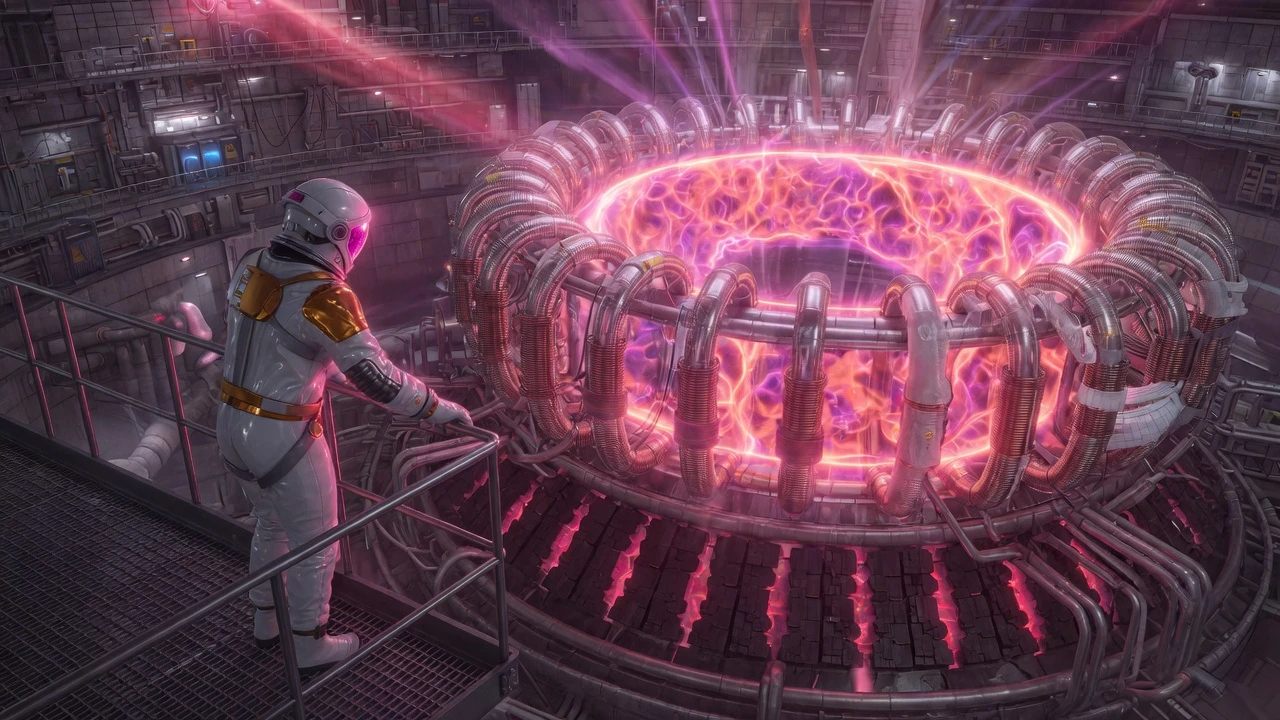
Introduction
Tokamaks, stellarators, and HTS compact tokamaks represent three distinct paths to fusion energy. This guide compares magnetic topology, plasma stability, engineering trade-offs, and timelines.
Prerequisites
- ✓ Tokamak physics basics
- ✓ Electromagnetism
- ✓ Plasma physics concepts
- ✓ Superconductor familiarity
Key Concepts
Step-by-Step Guide
- 1
Compare Tokamak vs Stellarator
Tokamaks use plasma current for poloidal field; stellarators use external coils only. Tokamaks: simpler coils, higher beta, but susceptible to disruptions and need current drive. Stellarators: complex 3D coils, lower beta, but inherently steady-state and disruption-free. Wendelstein 7-X (Germany) is the leading stellarator.
textTokamak vs Stellarator: Feature | Tokamak | Stellarator Poloidal field| Plasma current| External coils Coil complexity| Simple (2D) | Complex (3D) Disruptions | Yes | No Steady-state | Needs drive | Inherent Beta | ~5% | ~2-4% Example | ITER, JET | W7-X, HSX - 2
Understand Stellarator Advantages
Stellarators solve tokamak's biggest problems: disruptions and steady-state. No plasma current means no disruptions. No current drive needed means inherently steady-state — critical for a power plant. W7-X demonstrated 30-minute plasmas. Trade-off: 3D coil complexity (50+ twisted coils, each unique) and higher neoclassical transport. Optimized stellarators (W7-X) minimize transport via advanced coil design.
Tip: W7-X is the most optimized stellarator ever built. Its 50 non-planar coils are computer-optimized to minimize particle losses. W7-X has demonstrated tokamak-level confinement — a major milestone. - 3
Understand HTS Compact Tokamaks
REBCO HTS tapes operate at 20-77 K (vs 4 K for LTS) and carry much higher current density. Enables: 1) Higher field (20+ T vs 13 T), 2) Smaller device (power ∝ B⁴), 3) Higher temperature margin. CFS SPARC: R=1.65m, 20T, Q>1 target. ITER: R=6.2m, 5.3T, Q=10. SPARC achieves ITER-equivalent at 1/40 the volume.
Warning: HTS magnets face challenges: quench protection (HTS quenches slowly, harder to detect), mechanical stress (Lorentz forces at 20 T are enormous), and radiation damage (REBCO sensitive to neutrons, needs shielding). - 4
Evaluate Spherical Tokamaks
Spherical tokamaks (ST) have very low aspect ratio (R/a ≈ 1.3). Advantages: higher magnetic efficiency, higher beta (up to 40% vs 5%), lower cost. Disadvantages: less space for central solenoid, tighter tolerances, less shielding. Tokamak Energy (ST40) and NSTX-U lead ST research. ST + HTS is Tokamak Energy's approach.
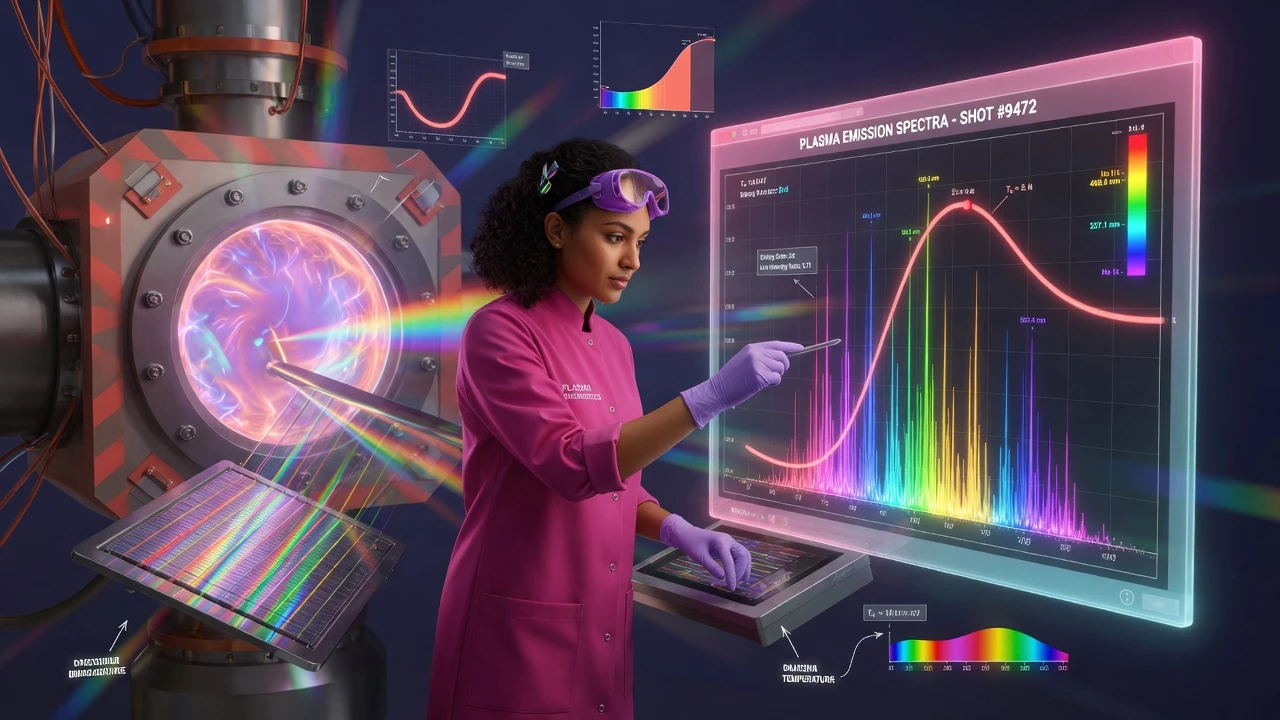
Compact fusion prototypes demonstrate that smaller, cheaper devices are possible with advanced magnet technology. - 5
Compare Inertial Confinement Fusion
ICF uses lasers (NIF) or pulsed power (Z-machine) to compress fuel pellets. NIF achieved Q>1 in December 2022. However, ICF power plants face: laser efficiency (<1% NIF, need 10-15%), repetition rate (1/day, need 10+/sec), and chamber survival. ICF is primarily weapons research, not a power plant path.
textFusion Approaches: Approach | Q achieved | Steady-state | Power plant Tokamak | Q=0.67(JET)| No (pulsed) | 2045-2055 Stellarator | Q<1 | Yes (30 min) | 2055-2065 HTS Compact | Q<1(SPARC) | No | 2035-2045 Spherical ST | Q<1 | No | 2040-2050 ICF (NIF) | Q=1.5 | No (pulsed) | 2065+ - 6
Evaluate Alternative Concepts
Beyond tokamaks/stellarators: 1) Magnetic mirrors (Lockheed CFR, Gas Dynamic Trap), 2) Field-Reversed Configuration (Helion, TAE Technologies), 3) Z-Pinch (Zap Energy), 4) Reversed Field Pinch. These promise simpler/cheaper devices but are less mature. Helion ($500M+) and TAE ($800M+) have significant funding but no Q>1 yet.
Tip: Helion's FRC approach proposes direct energy conversion (no thermal cycle) and D-He3 fuel (no neutrons). If it works, simpler and more efficient. But D-He3 needs 100 keV (vs 15 keV for D-T) and He3 is extremely scarce. Physics unproven at fusion parameters. - 7
Assess Private Fusion Companies
Private fusion investment exceeded $7B by 2025. Key: CFS ($2B+, SPARC, Q>1 by 2027), Tokamak Energy ($200M+, ST40), Helion ($500M+, Microsoft PPA by 2028), TAE ($800M+), Zap Energy ($200M+), Realta (early). Most target Q>1 by 2027-2030, power plants by 2035-2045. Aggressive timelines — fusion has a history of delays.
Warning: Helion promised Microsoft electricity by 2028 — most experts consider this unlikely. CFS SPARC Q>1 by 2027 is more credible (demonstrated HTS magnets) but still ambitious. Treat private timelines with skepticism. - 8
Compare Fuel Cycles
D-T: lowest temp (15 keV), highest cross-section, but 80% energy as 14 MeV neutrons. D-D: no tritium, but 50 keV and lower cross-section. D-He3: aneutronic, but 100 keV and He3 is scarce. p-B11: truly aneutronic, but 500 keV. All first-gen plants use D-T. Aneutronic fusion is a long-term goal.
textFuel Cycles: Fuel | Temp(keV)| Neutrons | Tritium | Difficulty D-T | 15 | 80% | Yes | Easiest D-D | 50 | Some | No | Hard D-He3 | 100 | ~1% | No | Very hard p-B11 | 500 | ~0% | No | Extreme First gen: D-T. Long term: p-B11 (aneutronic). - 9
Evaluate Engineering Trade-offs
Key comparisons: 1) Magnet tech (LTS vs HTS), 2) Blanket (TBR>1.05 needed — unproven at scale), 3) Divertor heat flux (10 MW/m²), 4) Remote maintenance (all robotic), 5) Availability (>70% uptime needed), 6) Cost ($5-10B first plants, target $2-5B nth-of-a-kind). Engineering challenges are as significant as plasma physics.
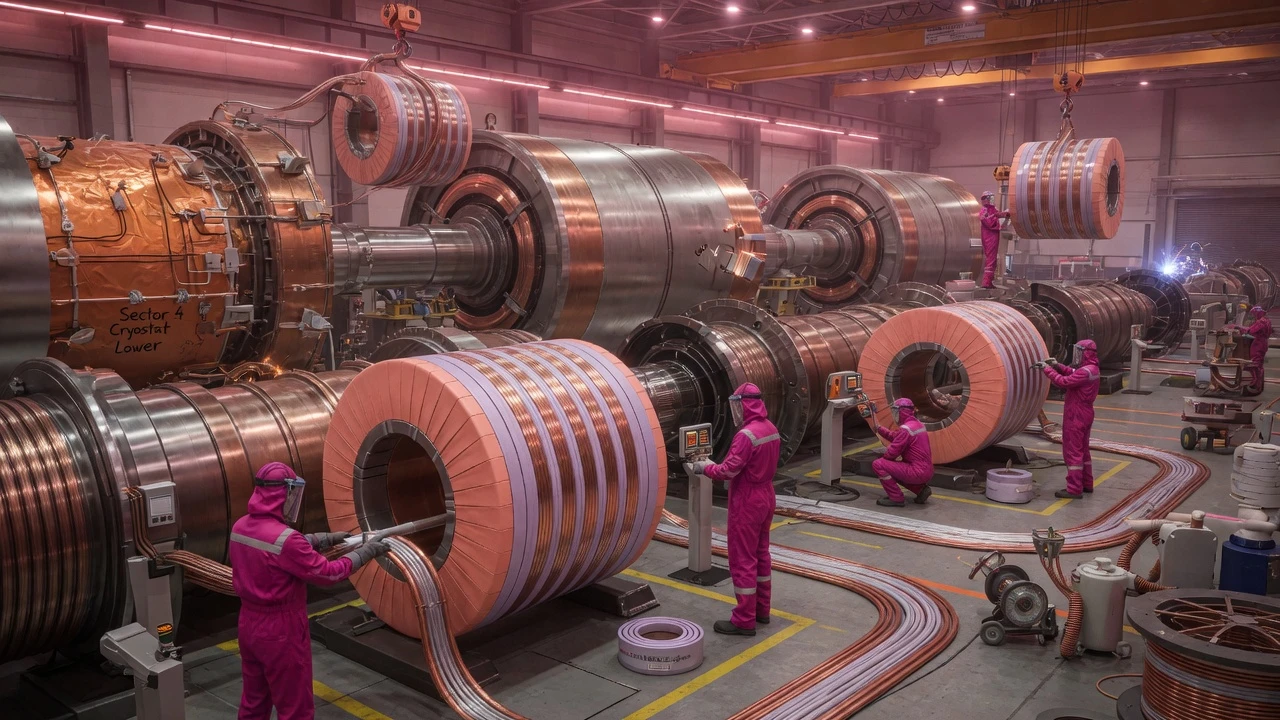
A fusion power plant: magnets, blanket, divertor, tritium plant, heat exchanger, turbine, and remote maintenance systems. - 10
Assess Timelines and Risk
Most likely path: CFS SPARC (Q>1, 2027) → ARC (power plant, 2035-2040) → commercial (2040s). ITER (Q=10, 2039-2042) → EU DEMO (2050s). Stellarator: W7-X optimization → DEMO (2060s). ICF: weapons research, power plant 2065+. Key risks: ITER delays, HTS quench issues, tritium breeding failure, materials failure. Fusion on grid: 2050s — too late for climate goals but valuable long-term.
Tip: Fusion is not a climate solution — it arrives too late for 2050 net-zero. But it is a long-term energy solution (2100+) with unlimited fuel, no carbon, no long-lived waste. Invest for the 22nd century. - 11
Choose the Right Approach
For researchers: tokamaks (most mature), stellarators (best steady-state), HTS compact (fastest to Q>1). For investors: CFS (most credible), Tokamak Energy (ST+HTS), Helion (high risk/reward). For policy: support ITER, HTS development, materials research. The best approach depends on the goal — don't pick a single winner. Fusion is too early to down-select.
Warning: Do not pick a single fusion approach as "the winner." Multiple approaches should be pursued in parallel. The approach that achieves a commercial power plant first may not be the one with the best physics — engineering and economics will determine the winner.
Summary
Three main fusion approaches: tokamaks (ITER, Q=10, most mature), stellarators (W7-X, steady-state, no disruptions, complex coils), and HTS compact tokamaks (CFS SPARC, 20T magnets, smallest path to Q>1). Spherical tokamaks and alternatives (Helion FRC, Zap Z-pinch) offer potential but are less mature. ICF (NIF) achieved Q>1 but is not a practical power path. D-T is the only viable first-gen fuel. Private investment ($7B+) accelerates timelines, but grid power is likely 2045-2055.
Frequently Asked Questions
HTS compact tokamaks (CFS SPARC) are most credible for near-term Q>1 (2027). For power plants, stellarators' steady-state advantage may be decisive. Multiple approaches should be pursued in parallel — fusion is too early to down-select.
Fusion power scales as B⁴. HTS enables 20+ T fields (vs 13 T for LTS), giving 5-10x more power for the same size. CFS SPARC (R=1.65m) achieves ITER-equivalent (R=6.2m) performance at 1/40 the volume.
Inherently steady-state (no plasma current) and disruption-free. For a 24/7 power plant, these are enormous advantages. Trade-off: more complex 3D coils and slightly worse confinement.
CFS is most credible — demonstrated 20T HTS magnets, clear physics basis. SPARC Q>1 by 2027 is plausible. ARC power plant by 2035-2040 is ambitious but possible. Helion's 2028 PPA is widely considered unrealistic.
Test Your Knowledge
1. Why does fusion power scale as B⁴?
Power density ∝ n²·T. In tokamaks, n ∝ B² and τ ∝ B², so power ∝ B⁴. Doubling field gives 16x more fusion power — why HTS magnets enable dramatic size reduction.
2. Main advantage of stellarator over tokamak?
Stellarators use only external coils — no plasma current, no disruptions, no need for current drive. For 24/7 power plant operation, this is critical. Trade-off: complex 3D coil design.
3. Which private company is most credible for near-term Q>1?
CFS: uses tokamak (most mature), demonstrated 20T HTS magnets (world record 2021), based on validated scaling laws, $2B+ funding. SPARC Q>1 by 2027 is the most credible private timeline.