How Satellite Constellations Work: Starlink, Kuiper, and the LEO Broadband Race
Satellite constellations like Starlink, Kuiper, and OneWeb are reshaping global connectivity. This guide explains the orbital mechanics, coverage optimization, and engineering trade-offs behind mega-constellations.
Introduction
Satellite constellations like Starlink, Kuiper, and OneWeb are reshaping global connectivity. This guide explains the orbital mechanics, coverage optimization, and engineering trade-offs behind mega-constellations.
Prerequisites
- ✓ Basic physics (orbital mechanics concepts)
- ✓ Understanding of RF communications
- ✓ General knowledge of satellite systems
Key Concepts
Step-by-Step Guide
- 1
Understand LEO vs GEO Trade-offs
Geostationary orbit (GEO, 35,786 km) provides continuous coverage with 3 satellites but has ~250ms latency. LEO (300-600 km) provides ~20ms latency but requires hundreds to thousands of satellites for continuous coverage. Starlink chose LEO for latency-sensitive applications like gaming and video calls.
Tip: The latency difference is fundamental — speed of light limits mean GEO can never match LEO latency, regardless of technology improvements. - 2
Design Orbital Shells
A constellation is organized into shells — each with a specific altitude, inclination, and number of orbital planes. Starlink has 5 shells: 550km at 53° (1,584 sats), 540km at 53.2° (7,200 sats), 570km at 70° (3,600 sats), 560km at 97.6° (1,584 sats), and 460km at 53° (2,547 sats).
textStarlink Shell Design: Shell 1: 550km, 53° inclination - 72 planes × 22 sats = 1,584 sats - Covers 95% of populated areas Shell 2: 540km, 53.2° inclination - 72 planes × 100 sats = 7,200 sats - Capacity expansion layer - 3
Calculate Coverage and Capacity
Coverage depends on the minimum elevation angle (typically 25-40°). Lower elevation angles see more satellites but suffer more atmospheric attenuation. Capacity per satellite is limited by spectrum allocation and phased array capability. Starlink v2 satellites provide ~80 Gbps each.
Warning: Spectrum allocation is the primary constraint on constellation capacity. Ku-band and Ka-band are shared with other services, requiring coordination through the ITU. - 4
Implement Phased Array Technology
Phased array antennas electronically steer beams by adjusting the phase of individual antenna elements. This allows satellites to serve multiple users simultaneously and track moving ground terminals. Starlink uses flat-panel user terminals with phased arrays that cost ~$400-600 to manufacture.
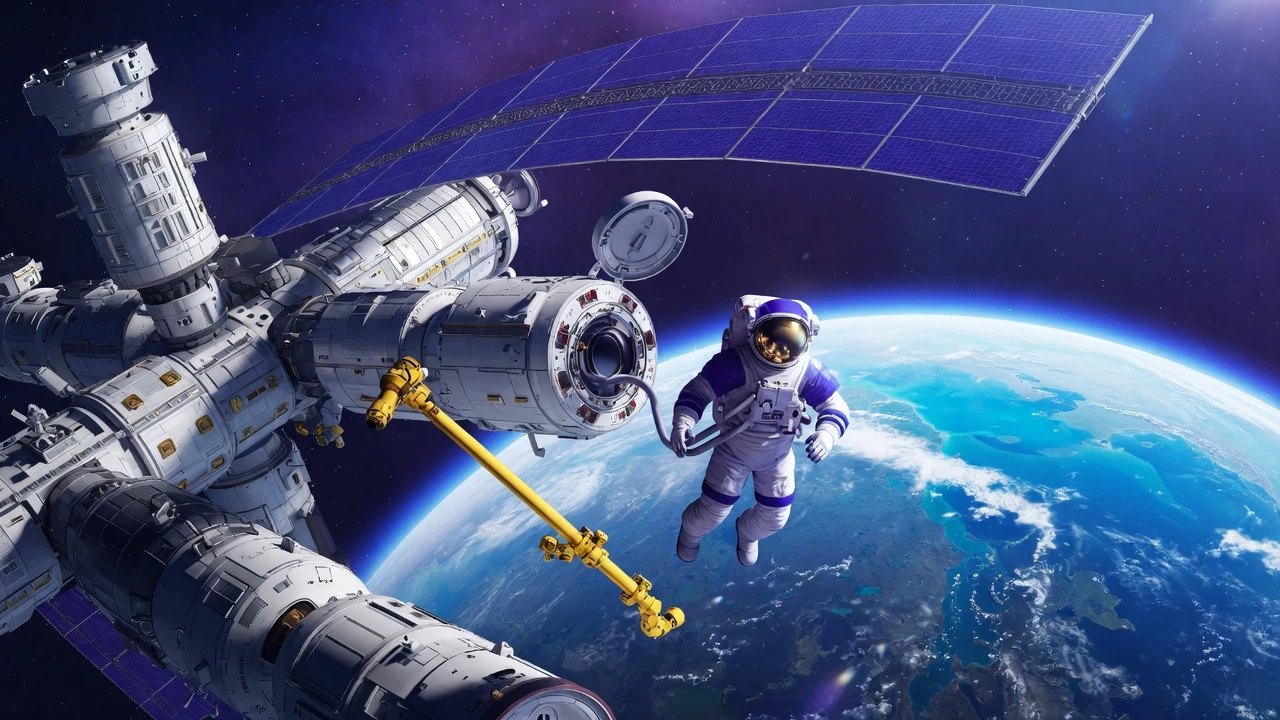
Phased array antennas enable dynamic beam steering — the key technology that makes LEO constellations practical. - 5
Deploy Inter-Satellite Links
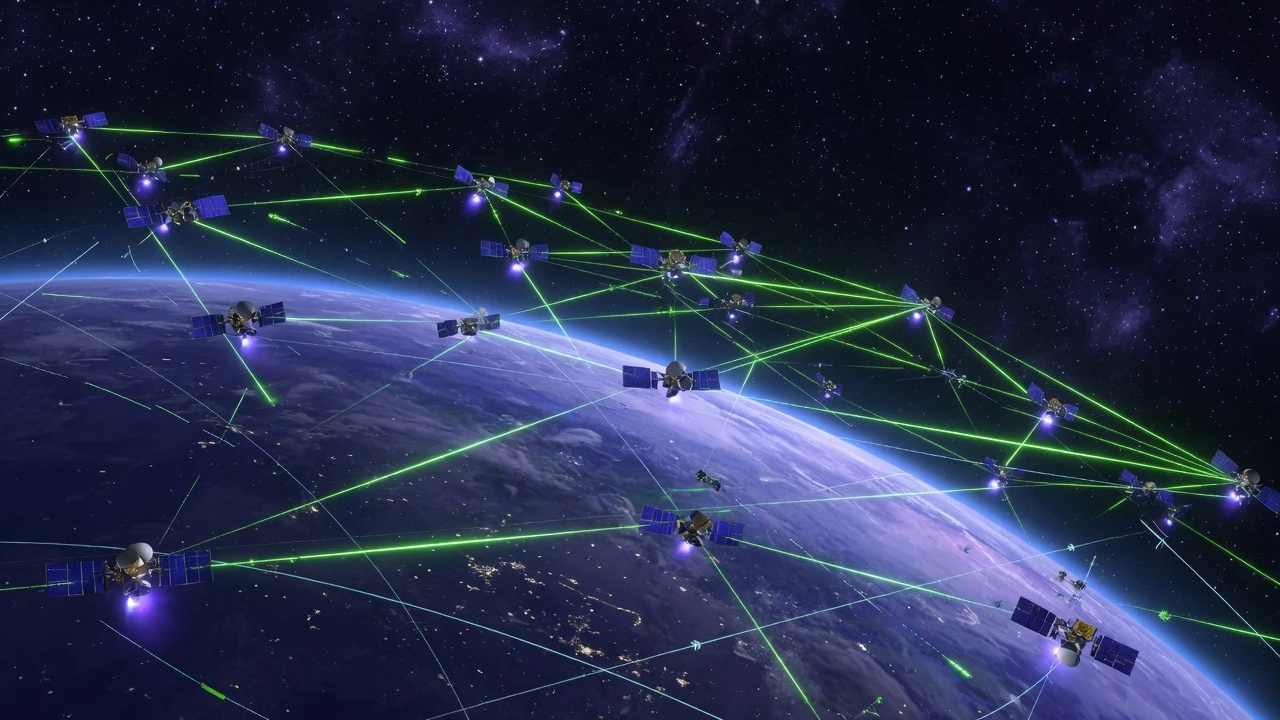
Laser inter-satellite links (ISLs) allow satellites to relay traffic without ground stations. This reduces latency for long-distance routes (e.g., New York to London can route through 2-3 satellite hops instead of through ground stations). Starlink v2 includes ISLs on all satellites.
Tip: ISLs are the key differentiator for Starlink over competitors. They reduce ground station costs by 60% and enable service in oceanic and polar regions. - 6
Manage Space Debris and End-of-Life
LEO constellations must deorbit satellites at end-of-life to avoid space debris. At 550km, satellites naturally deorbit within 5 years due to atmospheric drag. At higher altitudes, active deorbiting with propulsion is required. The FCC requires deorbit within 5 years of end-of-life.
Warning: A Kessler Syndrome cascade — where debris collisions create more debris — is a real risk with 30,000+ planned constellation satellites. Active debris removal may become necessary. - 7
Understand Regulatory Framework
Satellite constellations require: ITU spectrum coordination, FCC licenses (US), and landing rights in each country served. The regulatory process can take 2-5 years. Starlink has landing rights in 70+ countries; Amazon Kuiper is still in the licensing phase.
textRegulatory Milestones: 1. ITU spectrum filing (2-3 years coordination) 2. FCC license application (1-2 years) 3. Implementation deadline (6 years from filing) 4. Per-country landing rights (ongoing) 5. Safety approvals (deorbit plan, collision avoidance) - 8
Compare Major Constellations
Starlink (SpaceX): 12,000+ satellites operational, global coverage, 300+ Mbps service. Kuiper (Amazon): 3,236 satellites planned, first launch 2026. OneWeb: 648 satellites, completed but bankrupt and acquired by Eutelsat. Iridium: 66 satellites, L-band, global voice/data. Guowang (China): 13,000 satellites planned, national security focus.
- 9
Evaluate Ground Segment Requirements
Ground stations (gateways) connect the constellation to the internet backbone. Starlink has 200+ gateways globally. Each gateway needs: clear line of sight to multiple satellites, fiber backhaul, and regulatory approval. ISLs reduce but do not eliminate ground station needs.
- 10
Assess Market and Competition
The satellite internet market is ~$4B in 2026, projected to reach $20B by 2032. Key segments: rural/remote broadband ($8B), maritime ($3B), aviation ($2B), government/military ($4B), IoT ($3B). Starlink dominates with 5M+ subscribers; Kuiper is the main upcoming competitor.
- 11
Plan for Future Evolution
Next-generation constellations will feature: larger satellites with more capacity (Starlink v3), direct-to-cellphone connectivity (Starlink, AST SpaceMobile), optical ground links for higher throughput, and integrated GNSS services. The convergence of satellite and terrestrial networks is the next frontier.
Summary
Satellite mega-constellations in LEO provide low-latency global connectivity through hundreds or thousands of satellites organized in orbital shells. Key technologies include phased array antennas, inter-satellite laser links, and dynamic beam steering. Starlink leads with 12,000+ satellites and 5M+ subscribers. The main challenges are spectrum coordination, space debris management, and the regulatory complexity of operating in 70+ countries.
Frequently Asked Questions
As of mid-2026, Starlink has over 12,000 satellites in orbit, with plans for up to 42,000. They launch 60+ satellites per week using Falcon 9.
LEO constellations at 550km altitude achieve 20-40ms latency, comparable to terrestrial fiber for many routes. With inter-satellite laser links, long-distance routes can actually be faster than fiber (light travels faster in vacuum than in glass).
Constellations use automated collision avoidance systems that track objects via the Space Surveillance Network and maneuver using electric propulsion. Starlink performs 100+ collision avoidance maneuvers per week.
Yes — Starlink and AST SpaceMobile have demonstrated direct-to-cellphone connectivity using large phased array antennas. This works with standard 4G/5G phones without special hardware. Commercial service began in 2025 for text messaging, with voice and data expanding in 2026.
Test Your Knowledge
1. Why do LEO constellations require so many more satellites than GEO?
A LEO satellite at 550km orbits Earth every 95 minutes and covers a footprint of only ~1,000 km diameter. Continuous global coverage requires hundreds of satellites so that at least one is always visible from any location.
2. What is the primary advantage of inter-satellite laser links?
ISLs allow traffic to route between satellites in space, reducing the need for ground stations and enabling lower latency since light travels faster in vacuum than through fiber optic cables.
3. What is the main regulatory challenge for satellite constellations?
Spectrum is a finite resource shared with other satellite and terrestrial services. ITU coordination can take years, and each country requires separate landing rights for service provision.